
Mentor: Dr. Jennifer Ryan Project Description The goal of this research project is to use web-based online eyetracking platforms to develop a short task that may screen for memory problems in older adults. The way we view the world is influenced by how we make memories, and what we can remember. This research project willContinue reading “Online screening for age-related memory decline”
Category Archives: Project
How prior knowledge begets new memories

Mentor: Dr. Asaf Gilboa Project Description Learning something new is easier if we already have knowledge on that topic, but how this happens in the brain is only beginning to be understood. Most studies of how the brain makes new memories use stimuli, such as a list of unrelated words, that separate information from itsContinue reading “How prior knowledge begets new memories”
Development of autobiographical memory

Mentor: Dr. Nicole Anderson Project Description Autobiographical memory is poor for our early years; we recall few events from our first three years of life, and memory for events occurring between the ages of 4 and 7 is spotty. This Òchildhood amnesiaÓ has been attributed to various sources. The hippocampus is not developed sufficiently inContinue reading “Development of autobiographical memory”
Language revitalization through optimized learning techniques

Mentor: Dr. Jed Meltzer Project Description My lab studies language processing in adults, with applications to diagnosis and rehabilitation of disorders such as stroke and dementia, second language learning, and the relationship of language to other cognitive and motor processes. Recently we have studied the use of advanced software-based techniques for efficiently studying words, bothContinue reading “Language revitalization through optimized learning techniques”
Learning, memory, and reasoning: the mutual interplay of cognition’s key mechanisms

Mentor: Dr. Michael Mack Project Description Our ability to learn, reason, and remember often go hand-in-hand. However, scientific research has largely treated them as independent abilities with separate brain systems. More recent cognitive neuroscience findings suggest otherwise—the same brain regions known to support memory, like the hippocampus, also play a role in new learning. InContinue reading “Learning, memory, and reasoning: the mutual interplay of cognition’s key mechanisms”
Research and Practice Partnership: Building Awareness and Increasing Social Emotional Capacity in the Early Years (RAISE)

Mentor: Dr. Tina Malti Project Description Child emotional and behavioral challenges are a significant health issue in Canada and are of heightened concern during the COVID-19 pandemic. Promotion of children’s social-emotional development (e.g., emotion regulation, empathy, and self-reflection) using a trauma-informed approach may be a fruitful means to support children and families in combating difficultiesContinue reading “Research and Practice Partnership: Building Awareness and Increasing Social Emotional Capacity in the Early Years (RAISE)”
Diaspora Communities Organizing in Response to Disasters

Mentor: Dr. Ryann Manning Project Description Diaspora communities – individuals who identify with and retain a connection to their country of birth or ancestry, but reside elsewhere (Nielsen & Riddle, 2009)—can play an important role during times of crisis their countries of origin (DEMAC, 2016; Erikson, 2014; International Organization for Migration, 2015; Loebach, 2015; Nagarajan,Continue reading “Diaspora Communities Organizing in Response to Disasters”
Responses to Feeling Invisible

Mentor: Dr. Becca Neel Project Description People want to belong and to be valued by others, but sometimes, that desire is thwarted. Devaluation can take many forms. In our lab, we are examining one form of devaluation in particular: invisibility. When someone is invisible, they are overlooked and ignored by others. How does a personContinue reading “Responses to Feeling Invisible”
Evaluating eye-movement and brain imaging indicators that predict dementia in healthy older adults

Mentor: Dr. Rosanna Olsen Project Description Alzheimer’s disease (AD) is a devastating and costly neurodegenerative illness. A major barrier to the discovery of new treatments is that we currently lack measures that can detect AD prior to symptom onset. Early and effective diagnosis of AD provides a critical opportunity for patients to seek out treatmentsContinue reading “Evaluating eye-movement and brain imaging indicators that predict dementia in healthy older adults”
Meaningful Interactions with Friends

Mentor: Dr. Elizabeth Page-Gould Project Description Taken on the whole, interacting with other people – even virtually – seems fundamental to human thriving. Indeed, meaningful interactions make for a good life. However, not all social interactions leave us feeling fulfilled. This descriptive project seeks to map out the qualities of meaningful interactions, with a particularContinue reading “Meaningful Interactions with Friends”
Children and adults’ thinking about possible, improbable, and impossible events

Mentor: Dr. Samuel Ronfard Project Description Unlike older children and adults, preschool children typically judge improbable events, such as making blue applesauce or finding an alligator under a bed, to be impossible. This developmental pattern is robust and holds for phenomena across the physical, psychological, and biological domains. Children and adults might be making differentContinue reading “Children and adults’ thinking about possible, improbable, and impossible events”
Memory Organization and Development

Mentor: Dr. Meg Schlichting Project Description Past work suggests that the memories of children, adolescents, and adults differ in many ways. There may be important differences in both how memories are stored as well as how they are later accessed that give rise to the myriad behavioural changes we see over development. For example, itContinue reading “Memory Organization and Development”
Good and Evil, Reward and Punishment

Mentor: Dr. Jessica Sommerville Project Description Even babies possess moral tendencies: infants will help others achieve their goals, and evaluate others based on whether they are helpful or harmful. At the same time, we know that these early moral sensitivities likely differ from more mature moral responses in fundamental ways. The question is, how? TheContinue reading “Good and Evil, Reward and Punishment”
Are people blind to their own power?
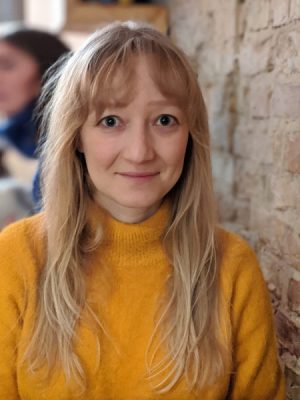
Mentor: Dr. Jennifer Stellar Project Description Hierarchies in which some individuals have more power than others are a defining feature of almost every group or society. However, holding power does not necessarily mean one fully understands the extent of their power. For example, a boss may think that if they ask their employee to helpContinue reading “Are people blind to their own power?”
How do first-year undergraduate students understand “knowledge”?

Mentor: Dr. Romin Tafarodi Project Description The rapid growth and development of the service sector over the past half-century has led to the increased pragmatizing of knowledge as occupational asset. How is this reflected in our understanding of knowledge itself? To examine how university students at the University of Toronto define, identify, pursue, and hopeContinue reading “How do first-year undergraduate students understand “knowledge”?”
Technology and You: How Digital Devices and Applications affect Work and Non-Work Performance and Health

Mentor: Dr. Soo Min Toh Project Description How does the work and non-work domains of your life interact to influence how well you perform in each domain? How can one domain enhance the other in a mutually supporting and sustainable way? Different researchers have approached these questions from different perspectives and on different populations. WithContinue reading “Technology and You: How Digital Devices and Applications affect Work and Non-Work Performance and Health”
Understanding how drivers respond to dangerous situations

Mentor: Dr. Benjamin Wolfe Project Description If you are driving down the road and someone steps into the road ahead of you, what do you need to know to stop in time? How quickly can you understand the scene and understand what you can do to avoid a crash? I’ve shown that we can understandContinue reading “Understanding how drivers respond to dangerous situations”
Musical movement in childhood

Mentor: Dr. Laura Cirelli Project Description Some music just makes us want to move, whether dancing with a crowd at a rock concert or unconsciously tapping your toe to the beat of the song on the radio. Previous research has shown that adults are more inclined to move to certain kinds of music Ð forContinue reading “Musical movement in childhood”
Singlehood and well-being

Mentor: Dr. Geoff MacDonald Project Description My lab is studying various dimensions of singlehood that may contribute to well-being. Our published research has shown that feeling connected to family and friends as well as feeling sexually satisfied are important contributors. We have several simultaneous projects underway investigating what healthy singles do (e.g., how much timeContinue reading “Singlehood and well-being”
Social Class and Cooperation

Mentor: Dr. Stéphane Côté Project Description Do people from the same social class background cooperate more with each other than people from different social class backgrounds? If so, what is the explanation for this difference in cooperation? And, critically, what strategies can be implemented to reduce this difference? These questions have important societal and organizationalContinue reading “Social Class and Cooperation”
Attitudes and Preferences in Social Contexts
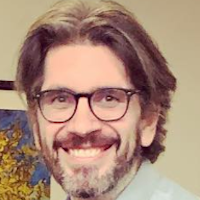
Mentor: Dr. William Cunningham Project Description Our lab broadly focuses on a variety of questions pertaining to (1) why people stereotype and have prejudices; (2) how people build self concepts from their social roles and identities; (3) how our goals shape our experience and behaviour; and (4) how we use memories to form preferences. OurContinue reading “Attitudes and Preferences in Social Contexts”
Ambiguous Bias

Mentor: Dr. Laura Doering Project Description Large-scale surveys and audit studies demonstrate that lower-status groups (women, racial minorities, etc.) experience bias in the workplace. Yet individuals often struggle to determine whether any potentially-biased event was, in fact, discriminatory. For example, when a woman is passed up for a promotion at work, she may wonder: WasContinue reading “Ambiguous Bias”
A systematic review of memory in Parkinson’s Disease

Mentor: Dr. Katherine Duncan Project Description Memory deficits are a commonly reported non-motor symptom of Parkinson’s Disease. The exact pattern of memory impairments, however, is unclear, and drastically vary across studies. One of the greatest overarching controversies in the literature regarding both the pattern of memory impairments in PD as well as its neural underpinnings,Continue reading “A systematic review of memory in Parkinson’s Disease”
Light touch interventions for supporting academic well-being

Mentor: Dr. Norman Farb Project Description In recent years, academic stress seem to be taking an increasing toll on undergraduate mental health seems to be rising in recent years. Encouragingly, our research shows that brief online ‘check-ins’ help students to pro-active in balancing . However these check-ins can feel like just another burden, making itContinue reading “Light touch interventions for supporting academic well-being”
How to Trigger Unmoralization

Mentor: Dr. Matthew Feinberg Project Description Although we typically think of our moral convictions in positive terms, it is important to note that moral convictions can also be problematic, as they often compel us to take unwavering stances and to stigmatize, even dehumanize, those who do not share our convictions. Indeed, some of the mostContinue reading “How to Trigger Unmoralization”
Learning Across Development

Mentor: Dr. Amy Finn Project Description How do children and adults differ in the strategies they use to learn about the world around them? Broadly, our lab aims to understand how cognitive and brain development can support or constrain learning outcomes. A long-term goal is to understand the nature of memory and learning mechanisms, andContinue reading “Learning Across Development”
Coping with the stress of politics

Mentor: Dr. Brett Ford Project Description People often feel strong negative emotions in response to political events Ð outrage, frustration, fear. Although these emotions are unpleasant, they also often motivate people to take action Ð protesting, contacting representatives, donating to a cause. This action can generate large-scale societal change, but change hinges on the collectiveContinue reading “Coping with the stress of politics”
Personality Traits, Financial Literacy, and Financial Decision-Making Among University Students

Mentor: Dr. Marc A. Fournier Project Description This study will examine the relationships between personality traits, financial literacy, and financial decision-making among university students. Previous research has found that whereas the personality trait of Conscientiousness (industriousness, orderliness) is associated with increased savings and the avoidance of debt, Agreeableness (compassion, politeness) is associated with financial hardship.Continue reading “Personality Traits, Financial Literacy, and Financial Decision-Making Among University Students”
Changing social roles: how manipulating gene expression alters social behaviour in eusocial naked mole-rats

Mentor: Dr. Melissa Holmes Project Description Naked mole-rats (Heterocephalus glaber, NMRs) are an exceptional species for studying the neural mechanisms of social behaviour. They are eusocial rodents, living in large colonies with strict social roles and the greatest reproductive skew reported in mammals. NMR colonies consist of a ‘queen,’ which is the only reproductive femaleContinue reading “Changing social roles: how manipulating gene expression alters social behaviour in eusocial naked mole-rats”
Language and Cognitive Development
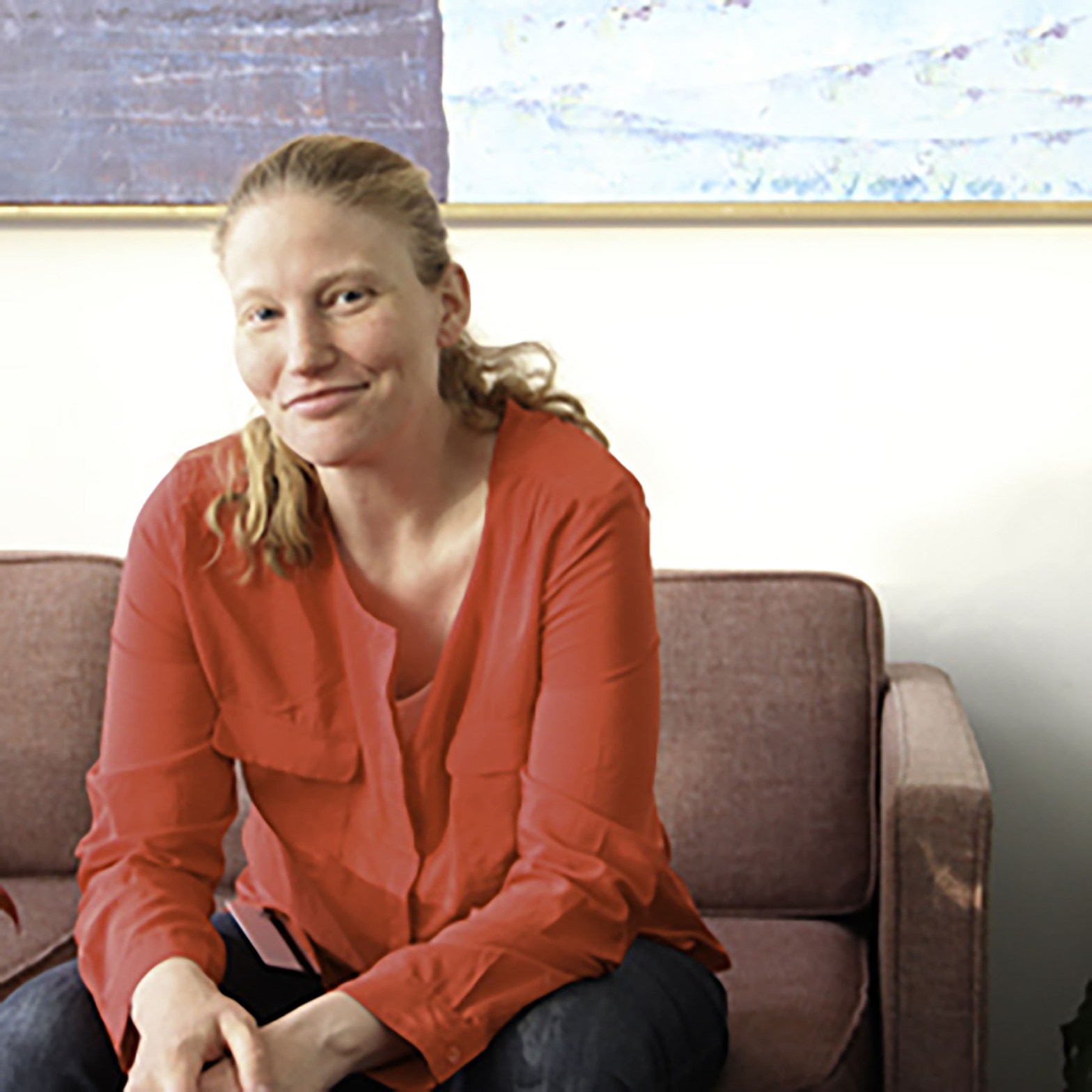
Mentor: Dr. Elizabeth Johnson Project Description Long before children learn to tie their shoes or ride a bike, they learn to comprehend and produce spoken language. Indeed, children easily outperform adults when it comes to acquiring language. And children readily acquire multiple languages at once with ease. This is amazing when you consider just howContinue reading “Language and Cognitive Development”
Diversity, Inclusion, Equity, Belonging – What Does it all Mean?

Mentor: Dr. Sonia Kang Project Description Buzzwords like diversity and inclusion are everywhere these days, as are associated terms like equity, belonging, and allyship. But what do these terms really mean, and how are they understood by individuals and organizations? Past research has demonstrated that while these words are commonly used by organizations to signalContinue reading “Diversity, Inclusion, Equity, Belonging – What Does it all Mean?”
Memory organization over time

Mentor: Dr. Morgan Barense Project Description A hallmark of human behavior is the recounting of experiences and the retelling of our past. When we first recall a recent event, we tend to include lots of details about the event, but as the event fades in our memory, the access to details decreases, potentially changing theContinue reading “Memory organization over time”